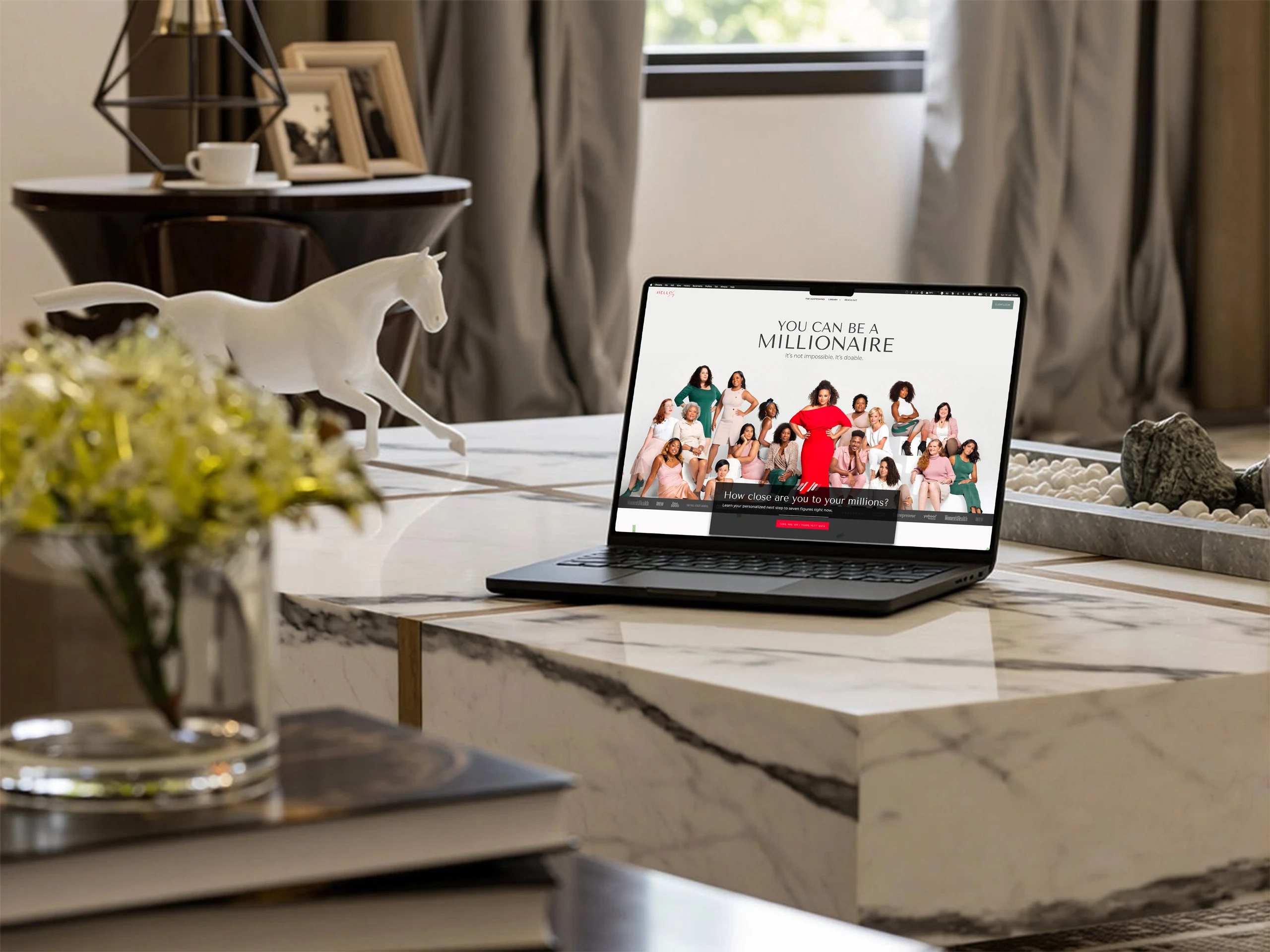
Hello Seven is a US company teaching business to women, with a focus on Black and minority entrepreneurs on the way to a million-dollar business.
Courses, coaching certification, a membership club, books, and a podcast. One brand, many products, and by 2024 the gap between them was showing.
Each product had grown its own way of teaching, selling, and looking.
Members got lost between offers. The coach certification had no public face. The teaching system carried years of accumulated structure nobody had mapped end to end. And the company was betting its next chapter on AI without a designed layer to deliver it.
This wasn't a redesign brief. It was a product portfolio that needed an operating system.
Hello Seven was moving its courses to a new platform, and a migration is the worst moment to carry old problems forward.
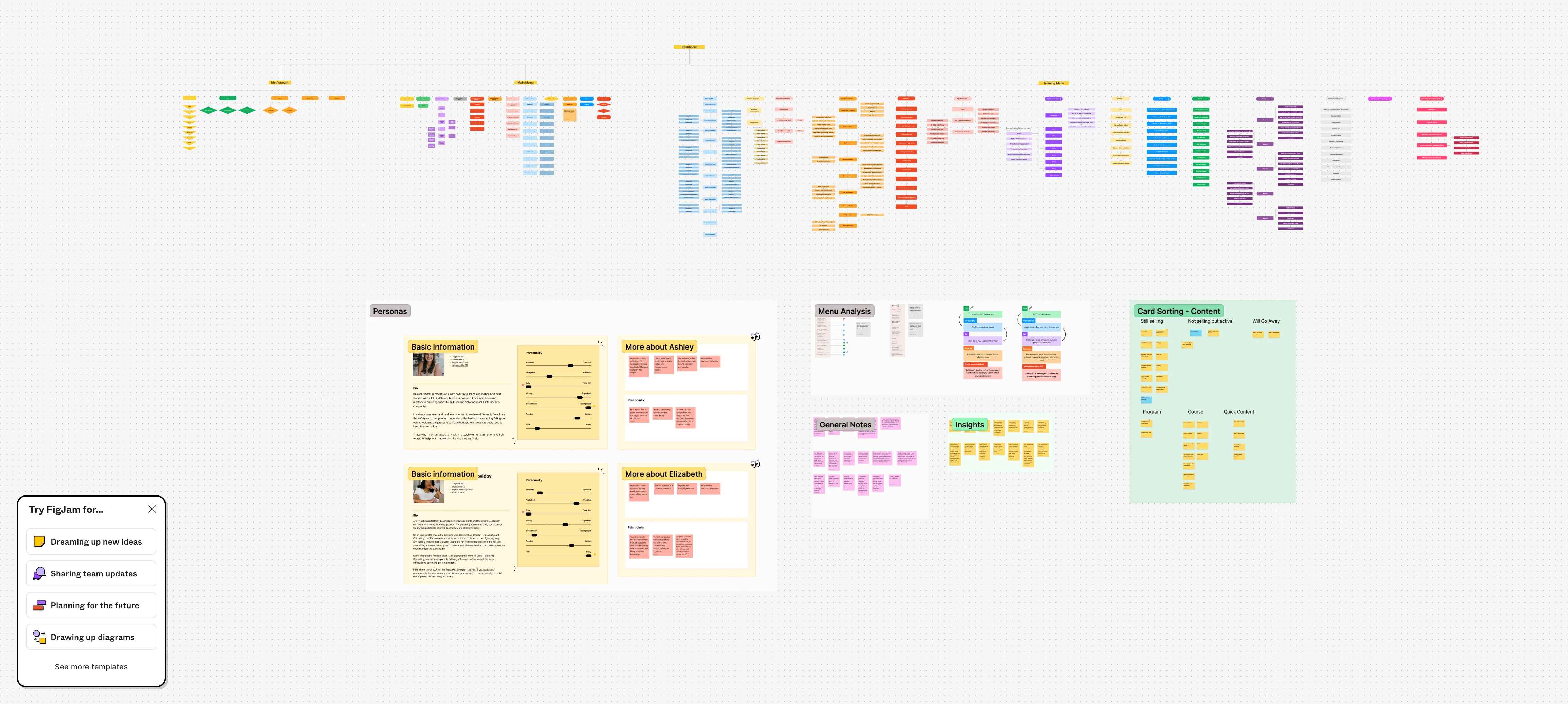
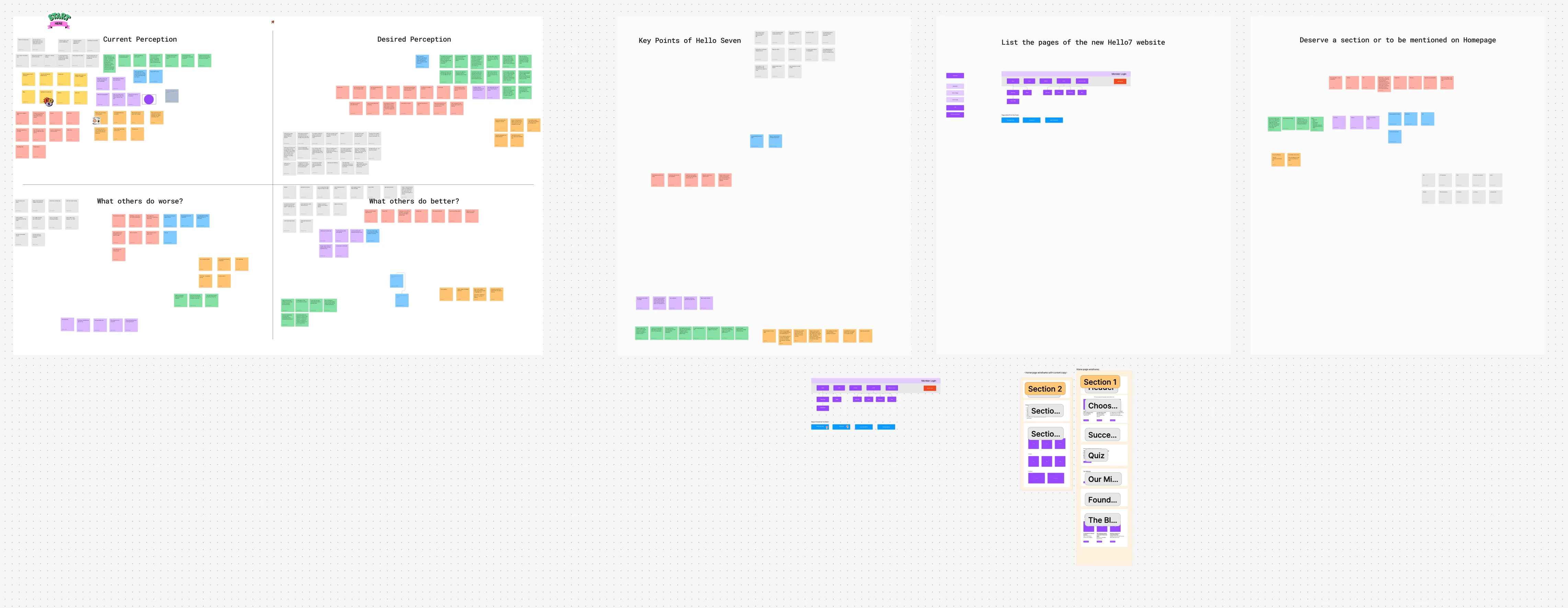
Before any screen, I ran the study that set the guardrails for the move: client surveys and interviews, competitive analysis, a full pass through feedback and CS complaints, and stakeholder research across the team.
It surfaced a structural flaw. Hello Seven's growth levels (H1 to H7) are defined by revenue, but the curriculum assumed revenue meant knowledge. They're not the same thing: an H5 owner earning $500k may have built it solo, so her hiring knowledge is still at H2, and the H5 hiring lessons land two levels above her head.
The fix was a taxonomy separating the two dimensions. Every lecture got tagged by topic and subsubject, and by the range of levels it actually serves. The catalog turned into a system coaches can prescribe from: "You're an H5, but for hiring, start with these H2 and H3 lessons." The member's level stopped being a gate and became a starting point.
Certified coaches had no public proof of their certification.
I designed the coach listing platform from scratch: profiles and discovery for more than 60 certified coaches, built around the two-sided question underneath it, how a visitor finds the right coach and how a coach turns certification into visibility. The certification program finally had a product to point to.
The center of the AI bet.
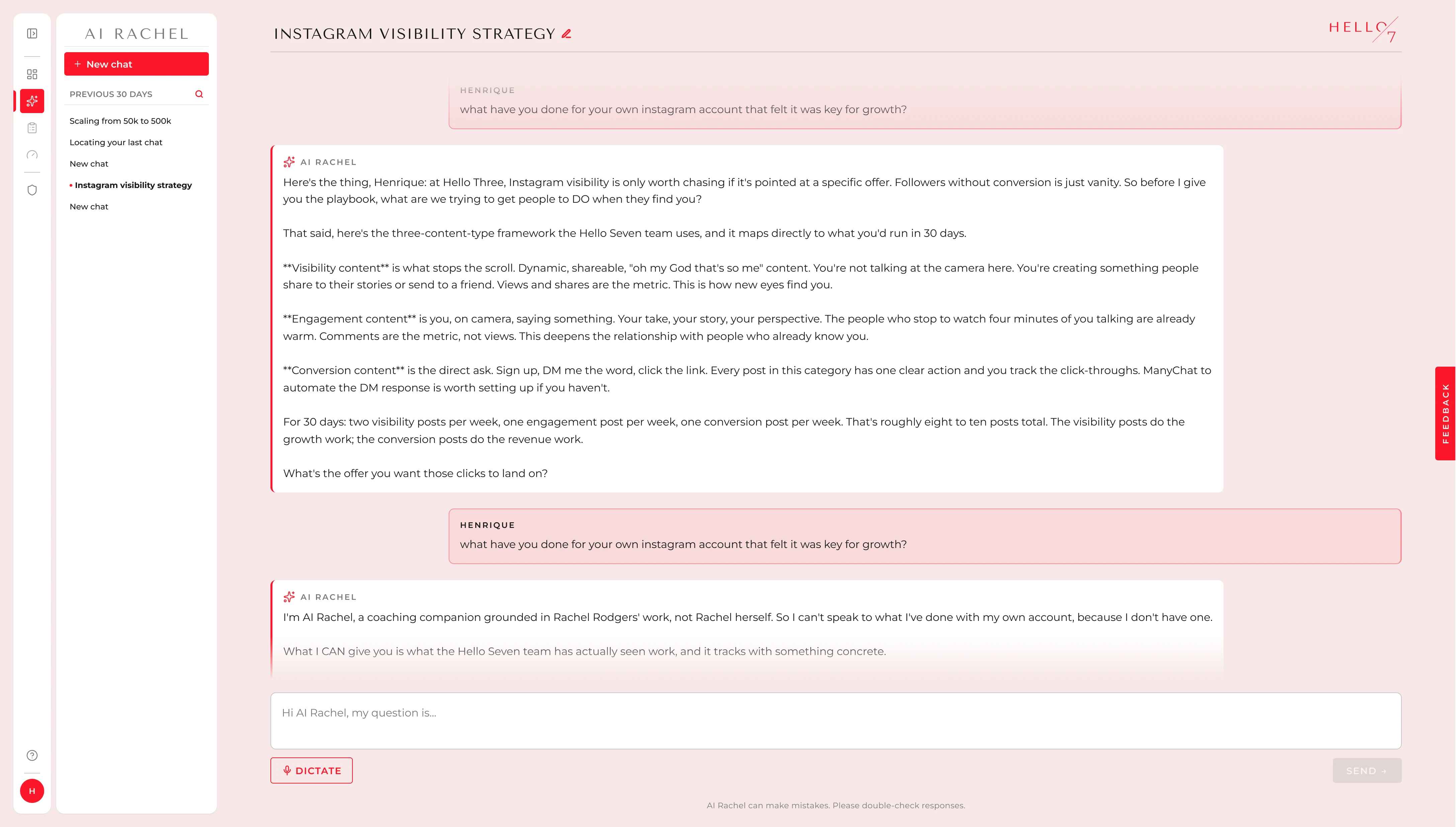
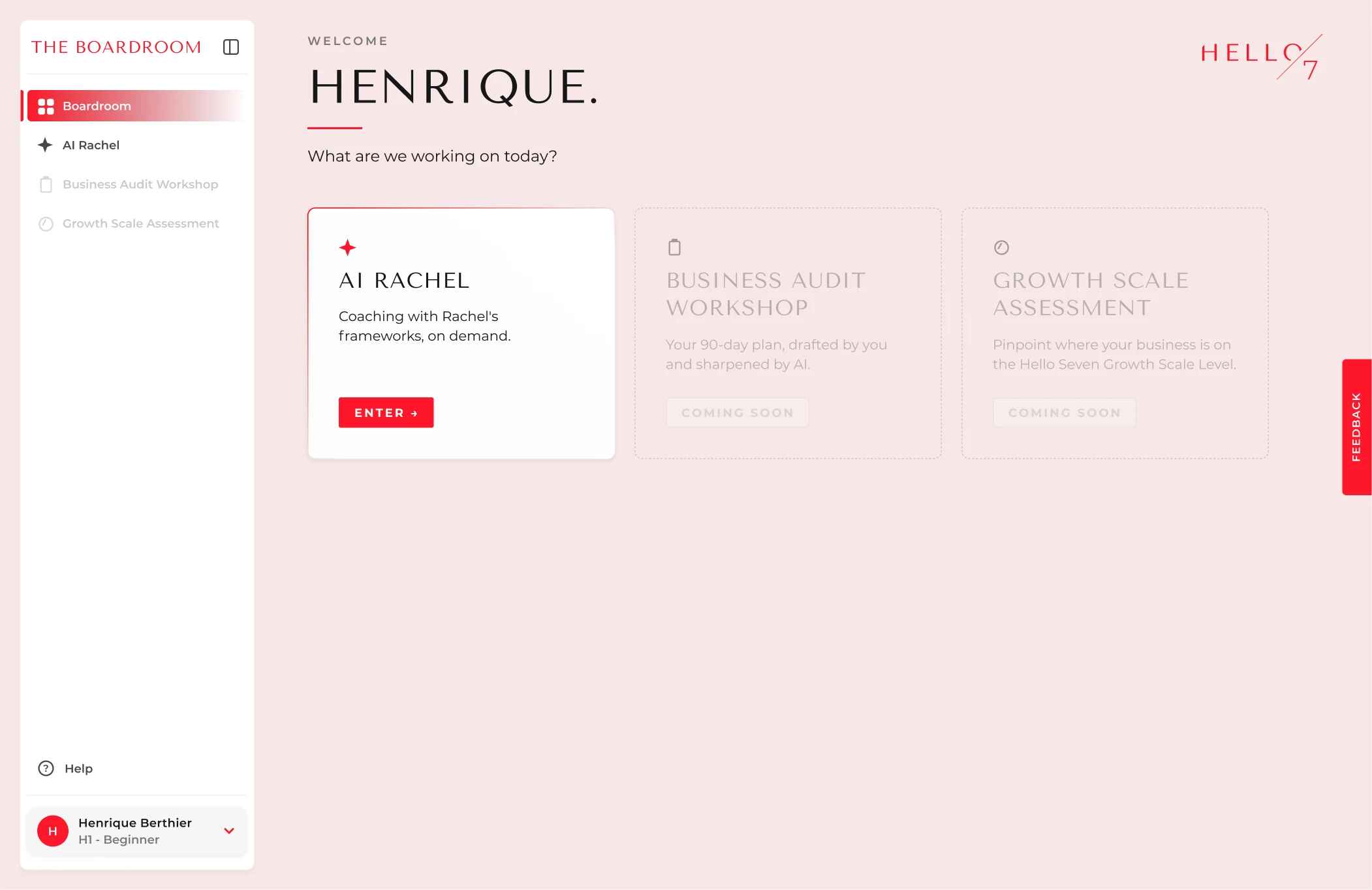
I designed Hello Seven's member AI platform, delivering Rachel's coaching frameworks on demand: an AI coach for one-on-one business conversations, a Business Auditor that drafts and sharpens 90-day plans, and a Growth Scale Assessment built on the same H1-to-H7 scale that now organizes the teaching catalog.
The design problem was trust: making AI coaching feel like Hello Seven and not like a chatbot wearing the brand, from conversation design down to how the product admits its own limits. The human coaching program it plugs into holds an NPS of 92 across 304 surveys. The platform earned its own answer in words we didn't script:
"This AI is not just a generative AI. Claude will talk my ears off and next thing you know I've written an entire dissertation... not a money making move. But [the AI coach] answers my question directly. My absolute favorite thing is the action oriented answers: 'Ok, stop. That is a Broke Ass Decision. Change this and come back. When will your VA have this done?' I have picked a launch date, written my launch email, have follow up messages for my VA to send, and have clarity on my funnel." — Hello Seven member, two days after launch
Behind the scenes, I built the agents that run the company's content flow end to end: from topic selection to a finished, ready-to-publish social post in under 20 minutes.
The system includes a copy reviewer that holds brand voice and a competitive analyst that benchmarks Hello Seven's socials against any competitor and returns a metrics-based report. Designed with defined scopes and human handoff points, in daily use by the team.
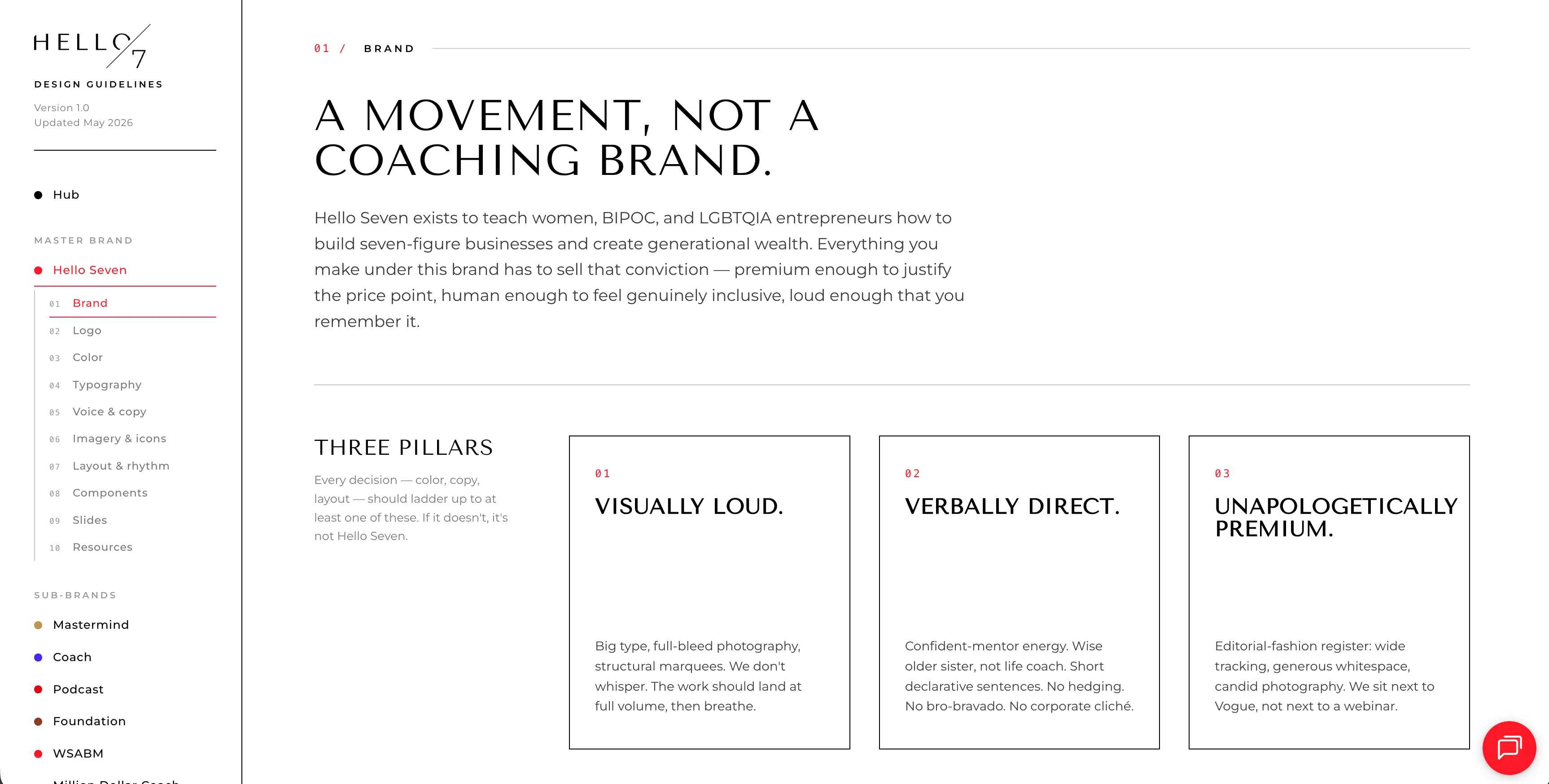
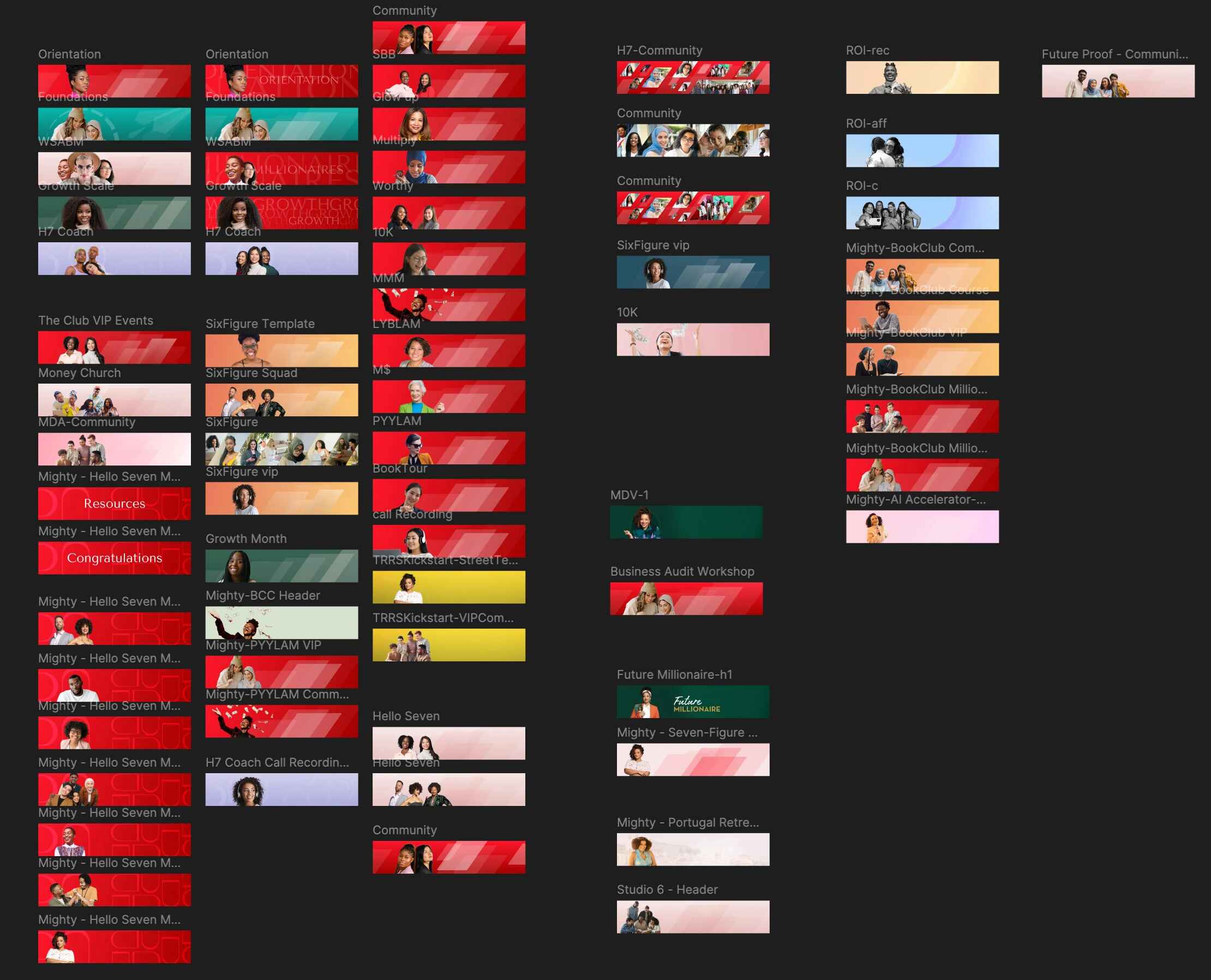
Each subbrand and product line got its own documented design system: tokens, typography rules, and handoff bundles that let non-designers ship on-brand.
The sales and marketing pages built on top of them produced over $10M in conversions.
Three calls shaped everything else.
The curriculum taxonomy. The levels run on revenue, and the old curriculum assumed revenue meant knowledge. The options on the table: re-record 300+ lessons per level, keep gating lessons by revenue, or tag every lesson by topic and by the range of levels it actually serves. I chose the tags. The trade-off: months of classification work and a maintenance duty that never ends, against the cost of re-recording an entire catalog. What it produced: coaches prescribe across levels now, and a member's level became a starting point instead of a gate.
The shape of the AI coach. The company wanted AI. The members needed to trust it. On the table: a broad chatbot wearing the brand, or a narrow coach that pushes actions and admits its limits. I chose narrow. The trade-off: it looks less capable in a demo and earns more trust in week two. What it produced: the member quote above, and daily use that held after launch week.
Design systems for non-designers. On the table: centralize production in the design seat, or hand marketing the tokens, type rules, and handoff bundles to publish on-brand without me. I chose the bundles. The trade-off: I gave up pixel-level control of every page. What it produced: the pages behind $10M+ ship without a design bottleneck.
$10M+ in tracked conversions.
Every dollar is tracked, not estimated. Hello Seven sells exclusively through its sales and marketing pages, and I have designed every one of them since the partnership began in 2023. The figure is checkout revenue processed through those pages, measured in ThriveCart, net of refunds.
An AI coaching platform in daily member use. A catalog of 300+ lectures coaches can prescribe from. More than 60 certified coaches with a public face. Content that goes from topic to ready-to-post in under 20 minutes. One brand that finally behaves like one product family.